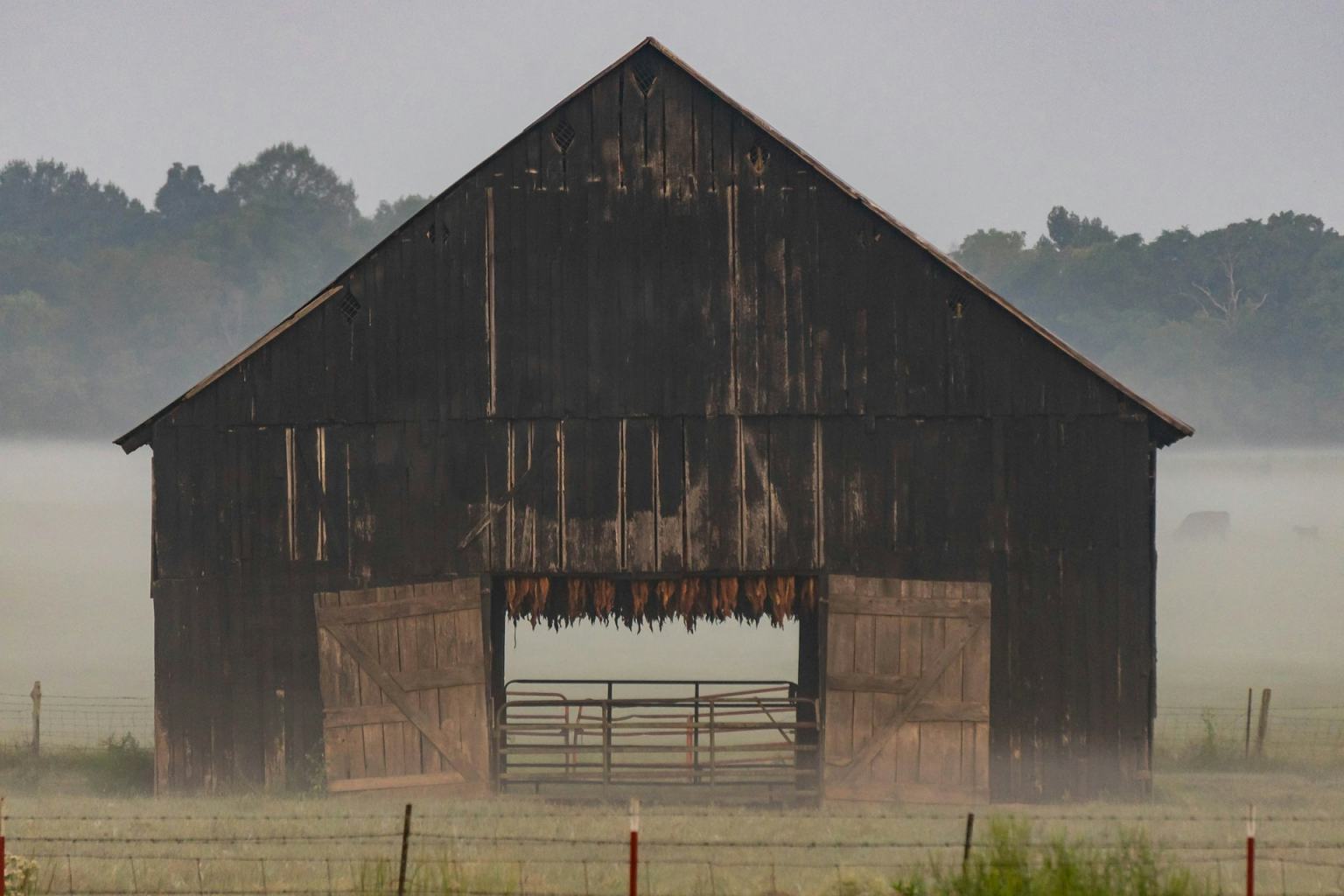
Barndominium Insulation in Tennessee: How to Stop Condensation (2026)
Barndominium insulation in Tennessee has one job most people underestimate: keeping water out of the walls. Steel siding and steel roofing do not breathe, Middle Tennessee summers run dew points in the 70s, and any surface colder than the air’s dew point gets wet. Get the insulation and air sealing right and a barndo is quiet, dry and cheap to cool. Get it wrong and you get dripping purlins, rusted fasteners, musty closets and mold behind the drywall. This guide covers what actually works in our climate, what it costs in 2026, and the questions to put to your builder before the walls close.
Why Metal Barndominiums Sweat in Middle Tennessee
Condensation is simple physics. Air holds water vapor, and the dew point is the temperature where that vapor turns back into liquid. When humid air touches a surface colder than its dew point, water beads on that surface. A cold glass of tea on a July porch does it. So does the back side of a steel panel.
Middle Tennessee hits a metal building from both directions. In winter, warm and moist indoor air from cooking, showers and breathing drifts toward the cold steel skin on nights that drop below freezing. In summer, outdoor air with a dew point in the low 70s leaks into wall and roof cavities and finds surfaces chilled by air conditioning. WSMV reported on August 5, 2026 that Nashville had logged just one night with a low in the 50s since June 1, tied for the 17th fewest in 153 years of records. That is a lot of wet air pushing on a building envelope.
Steel can only dry one way
A wood sided house can shed some moisture outward through its sheathing. A steel skin is effectively a vapor barrier on the outside. A 2024 analysis published in Walls and Ceilings put it plainly: with metal cladding, the wall assembly can only dry in one direction, toward the interior. That changes which insulation makes sense, and it is why a fix that works in a stick built house can fail in a barndo.
Do all barndominiums have condensation problems?
No. A well built barndominium with continuous insulation against the steel and tight air sealing is no more prone to moisture than any other house. The problems show up in buildings insulated like a farm shop: a single layer of foil bubble wrap under the roof, fiberglass batts pressed against bare steel, or open cell foam with nothing to stop vapor on the inside. Those choices are cheaper on day one and expensive by year five.
What R-Value Does a Barndominium Need in Tennessee?
Tennessee’s statewide residential energy code is the 2018 International Energy Conservation Code with Tennessee amendments, in effect since July 16, 2020. Williamson, Davidson, Rutherford, Maury and Marshall counties all sit in Climate Zone 4A, where the prescriptive targets are R-38 in the ceiling and R-13 in wood frame walls. Steel framed and post frame walls follow their own tables, and local jurisdictions adopt and amend codes on their own schedule, so the county codes office has the final word on your permit.
Treat those numbers as the floor, not the goal. Code minimums are written for typical stick framed houses with attics. Many barndominiums have tall walls, vaulted or open ceilings and no attic at all, which means the roof deck itself becomes the insulated ceiling. That is where spray foam earns its reputation.
| Area | Tennessee code minimum (Zone 4A) | What many barndo owners target |
|---|---|---|
| Ceiling or roof line | R-38 | R-38 or higher; closed cell at the deck if there is no attic |
| Walls | R-13 (wood frame) | R-19 to R-21, with closed cell foam against the steel |
| Air sealing | Required, verified at final | As tight as practical, then add mechanical fresh air |
| Slab edge | Per code table | Rigid foam at the slab edge on finished living space |
If you are still choosing a structure, the framing system shapes your insulation plan. Post frame walls have posts every 8 feet or so, which leaves deep, uninterrupted cavities. Red iron buildings put girts and purlins right against the steel, which can bridge heat unless foam covers them. Our post frame vs red iron barndominium guide walks through those tradeoffs.
Closed Cell vs Open Cell Spray Foam for a Barndominium
Spray foam comes in two families, and the difference matters more in a metal building than anywhere else.
Closed cell spray foam
Closed cell foam is dense and rigid, at roughly R-6 to R-7 per inch. At about 1.5 to 2 inches it acts as a vapor retarder, and it sticks directly to steel, so warm, moist air never touches the cold panel. It also adds some stiffness to the wall. It costs more per inch and should be installed by a crew that has done metal buildings, because applying it too thick in one pass can cause problems.
Open cell spray foam
Open cell foam is softer, cheaper and better at muffling sound, at roughly R-3.5 to R-3.8 per inch. The catch is that it lets water vapor pass through. Against steel in a humid climate, open cell foam without an interior vapor control layer can collect moisture right at the cold panel, which is the one place you do not want it. The Walls and Ceilings modeling found unprotected open cell foam on metal could take on enough moisture to damage fasteners, framing and the panels themselves.
The hybrid approach most metal building pros recommend
A common answer is a layer of closed cell foam sprayed directly on the inside of the steel, then the rest of the cavity filled with open cell foam, mineral wool or unfaced batts. You get the moisture protection where it counts and save money on the remaining depth. The same 2024 modeling found that 2 inches of closed cell on a Zone 4A metal wall was borderline under some site conditions, so ask your builder whether 2 inches or 3 inches makes sense for your wall design.
- Fiberglass batts pressed against bare steel: avoid, they hold condensation against the metal
- Foil bubble wrap alone: a shop detail, not a living space detail
- Rigid foam board with taped seams: a good option for exposed ceilings when installed carefully
- Mineral wool: fills cavities well and does not hold water like fiberglass
Barndominium Spray Foam Cost in 2026
Spray foam is priced by the square foot at a given thickness. This Old House’s cost guide, updated April 13, 2026, puts installed open cell foam at about $0.44 to $1.50 per square foot per inch, and closed cell at about $1.25 to $2.90 per square foot per inch. Three inches of closed cell runs about $3.75 to $8.70 per square foot.
Here is a rough illustration for a 40 by 60 barndominium with 14 foot walls. That is about 2,800 square feet of wall before you subtract doors and windows, call it 2,400 square feet of foam. Two inches of closed cell on those walls lands somewhere around $6,000 to $13,900 at the published range. The roof line adds a similar or larger number depending on whether you insulate the deck or a flat ceiling. Your installer’s quote will move with access, height, and how much of the space is shop versus living area.
One change for 2026: the federal 25C home improvement credit that covered 30% of insulation and air sealing costs ended for work placed in service after December 31, 2025, under the One Big Beautiful Bill Act. Some local power companies still run efficiency rebates through TVA’s EnergyRight program, mostly aimed at existing homes, so ask your electric provider before you budget on one.
Insulation is a small slice of the total build, but it is one of the few line items you cannot easily redo later. For the rest of the budget, see our cost to build a barndominium in Tennessee breakdown.
How to Stop Condensation in a Metal Barndominium
Insulation is half the answer. The other half is controlling air and humidity once people live inside.
- Seal the envelope first. Most moisture rides in on leaking air, not through solid walls. Closed cell foam at the steel does double duty as an air seal.
- Size the HVAC correctly. An oversized system cools the air fast and shuts off before it pulls moisture out. Ask for a Manual J load calculation rather than a rule of thumb.
- Plan for dehumidification. In a tight house in our summers, a whole house dehumidifier or a system with strong dehumidification mode keeps indoor humidity in the 40% to 50% range.
- Bring in fresh air on purpose. Tight houses need mechanical ventilation. An energy recovery ventilator trades stale air for fresh while limiting the humidity it brings in.
- Vent bathrooms and the range hood outdoors. Moisture from showers and cooking should leave the building, not drift into the ceiling.
- Separate the shop. If part of the building is a shop with big doors, insulate and air seal the wall between the shop and the living space like an exterior wall.
If the building already has a moisture problem, look for rust streaks on purlins, stains on ceiling drywall near the eaves, a musty smell in closets on outside walls, and water at the base of walls after a cool night. Those clues point to air leaks or the wrong insulation against the steel, and they are worth a specialist’s opinion before you buy.
Insulation Questions to Ask Before You Sign a Build Contract
I am a real estate agent, not a builder, but I sit across the table from a lot of barndo buyers, and these questions separate a thoughtful builder from one who insulates like it is a hay barn. Tennessee requires a licensed contractor for projects of $25,000 or more, so start with a license check.
- What goes directly against the steel on the walls and the roof, and how thick?
- Is the roof insulated at the deck or at a flat ceiling, and how is the space above vented or sealed?
- How are girts, purlins and posts covered so they do not bridge cold into the house?
- Will the house get a blower door test, and what number are you aiming for?
- What is the plan for fresh air and dehumidification?
- How is the shop separated from the living space?
The answers matter for comfort, utility bills and resale. A buyer’s inspector will notice rust and staining, and those findings affect value. Our posts on barndominium resale value and the pros and cons of living in a barndominium cover what buyers and appraisers look for.
Land comes first, though. If you are still looking for acreage, browse land for sale for a barndominium or see what is available in Maury County and Marshall County, where acreage prices leave more of the budget for the build itself.
Frequently Asked Questions
What is the best insulation for a barndominium in Tennessee?
For most metal barndominiums in Middle Tennessee, closed cell spray foam applied directly to the inside of the steel is the safest base layer, because it blocks air and slows vapor right at the cold surface. Many builders fill the remaining cavity depth with open cell foam, mineral wool or unfaced batts to control cost.
How do you stop condensation in a metal barndominium?
Keep humid air away from cold steel. That means closed cell foam or another continuous, sealed layer against the panels, tight air sealing, a correctly sized HVAC system, dehumidification in summer, and bathroom and kitchen fans vented outdoors.
Is open cell spray foam bad for a barndominium?
Not by itself, but it should not be the only layer against bare steel in a humid climate. Open cell foam lets vapor through, so moisture can collect at the cold panel. Used over a closed cell layer, or with proper interior vapor control, it works well and costs less.
How much does it cost to spray foam a barndominium in 2026?
Published 2026 ranges run about $0.44 to $1.50 per square foot per inch for open cell and $1.25 to $2.90 per square foot per inch for closed cell. Two inches of closed cell on about 2,400 square feet of wall works out to roughly $6,000 to $13,900 before the roof line.
What R-value does a barndominium need in Middle Tennessee?
Middle Tennessee is Climate Zone 4A, where Tennessee’s code calls for R-38 in the ceiling and R-13 in wood frame walls. Many barndominium owners go further on the walls, and your county codes office confirms what applies to your permit.
Plan Your Barndominium
Ready to go from reading to building? Start with the land, the loan or the build package.
The Barndominium Section
Land, financing, floor plans and a licensed builder for your barndominium in Middle Tennessee.